
Tipping law for UK restaurants and takeaways: what the Allocation of Tips Act means for you
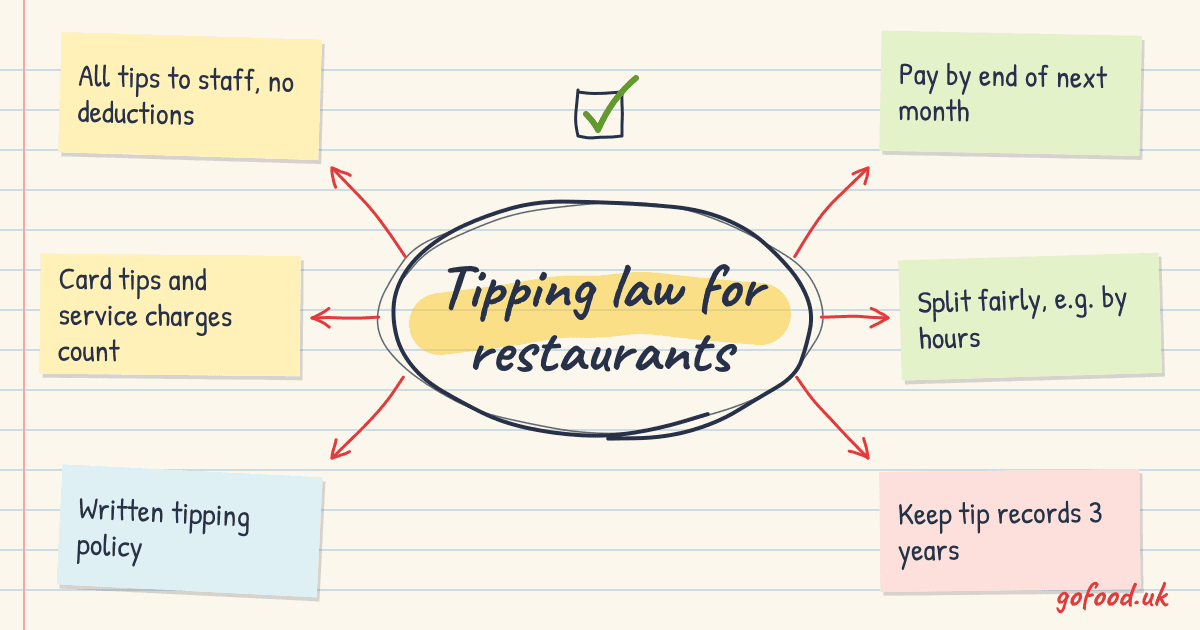
If customers leave tips at your restaurant, café or takeaway, the tipping law has applied to you since 1 October 2024. The Employment (Allocation of Tips) Act 2023 says that tips, gratuities and service charges must go to your workers in full, be shared out fairly, and be paid by the end of the month after the customer paid them. It covers England, Scotland and Wales.
Most of what the law asks for comes down to three things: pass every penny on, write down how you share tips, and keep a record of who got what. Your till and card machine already hold most of the numbers. This guide explains the tipping law for UK restaurants and takeaways in plain words, with a worked example and a checklist you can use this week.
The short answer
Under the UK tipping law, if you run a restaurant or takeaway and you collect or control tips, you must:
- Pass on all tips and service charges to workers without deductions, except in very limited cases such as income tax.
- Share them fairly. The statutory code of practice explains what "fair" means.
- Pay them on time: by the end of the month after the month the tip was paid. A tip left on 23 June must reach staff by 31 July.
- Have a written tipping policy if you get tips more than occasionally, and make it available to all workers.
- Keep a tipping record for three years and show workers their figures if they ask in writing.
Source: the government's code of practice on fair and transparent distribution of tips.
Which tips does the tipping law cover?
The law covers "qualifying tips". A tip qualifies if you, the employer, receive it or have control or significant influence over how it is shared. How the customer pays does not decide it.
| Type of tip | Covered by the law? |
|---|---|
| Card tip added on your card machine | Yes, very likely. You receive it. |
| Tip added to an online order you take payment for | Yes, very likely. You receive it. |
| Discretionary service charge on the bill | Yes. Service charges are covered too. |
| Cash tip in a shared jar that you tell staff how to split | Yes, likely. You have influence over it. |
| Cash tip collected by you and paid out through payroll | Yes. |
| Cash handed to one worker, who keeps it, with no involvement from you | No, this is out of scope. |
So a typical takeaway that takes card tips at the counter or on delivery is covered. A café where customers drop coins into a jar that staff share among themselves, without the owner deciding anything, may not be.
Who counts as a worker?
The law applies to all workers, including agency workers. It does not apply to self-employed people. It covers everyone who works in the business, not just front-of-house. You can decide that kitchen staff and delivery drivers on your payroll share in tips, as long as the split is fair and written down.
Can I deduct card fees from tips?
The code says tips must be passed on "without deductions", and the only example it gives of an allowed deduction is income tax. It does not list card processing fees as something you may take off. The safe approach is to pass on the full tip and treat card fees as a normal business cost. If you are unsure, ask your accountant before you change anything.
The owner also cannot keep a share of tips for the business. Tips belong to the workers.
Your written tipping policy
You need a written policy if tips are paid "on more than an occasional and exceptional basis". For most restaurants and takeaways that take card tips, that means you need one.
The policy should say, in plain language:
- how you accept tips (card machine, online, cash jar, service charge)
- who shares in them (front-of-house, kitchen, drivers, agency staff)
- how they are split (by hours worked, by role, equal shares, or a mix)
- when they are paid (for example, with the monthly wages)
- who runs the tronc, if you use one
All staff should have the same access to it. A copy pinned in the staff area and one in a shared chat group works well. If someone asks for it in another format, you should provide it.
Coming next: consulting your staff
The Employment Rights Act 2025 will make it compulsory to consult workers when you write or change your tipping policy, and to review it at least every three years. A revised code was laid before Parliament in summer 2026, then withdrawn in July 2026 so a new consultation could be held. At the time of writing (November 2026) the government says employers should keep following the existing code. It is still a good idea to ask your staff before you set or change the split. Check GOV.UK for the latest.
How to share tips fairly: a worked example
The law does not force one method. Sharing by hours worked is common because it is easy to explain. Here is an example for one week at a small takeaway.
Card tips taken this week: £300. Hours worked:
| Worker | Role | Hours | Share of hours | Tips |
|---|---|---|---|---|
| Amy | Counter | 30 | 30% | £90 |
| Ben | Kitchen | 40 | 40% | £120 |
| Chen | Driver | 20 | 20% | £60 |
| Dee | Counter (part-time) | 10 | 10% | £30 |
| Total | 100 | 100% | £300 |
The rate works out at £3 per hour (£300 ÷ 100 hours). Some places give front-of-house a bigger share per hour than the kitchen, or the other way round. That can be fair too, if the reason is clear and written in the policy. What you should avoid is a split that treats people differently for reasons unrelated to their work.
Using a tronc
A tronc is a separate arrangement where someone other than the employer (a "troncmaster") shares out the tips. If you appoint one and reasonably believe it runs independently and fairly, you are treated as having complied. You still stay responsible for making sure it is fair. If you learn it is not, you must act.
Records you must keep
Your tipping record must show all qualifying tips received at the business and how much each worker was given. Keep it for three years from the date each tip was paid.
A worker can make a written request to see their records, once every three months, looking back up to three years. You must give them the total tips for the period and their own share, but not other workers' amounts.
This is where your EPOS and card machine help. A simple routine:
- At cash-up, note the card tips total from the card machine report next to your sales. Our till cash-up guide shows a daily routine.
- Keep tips separate from sales in your records. Genuinely voluntary tips are outside the scope of VAT. A compulsory service charge is not a tip for VAT purposes and is taxed like the food. See our VAT on takeaway food guide.
- Each week or month, add up the tips and work out each person's share using your policy.
- Save the calculation (a spreadsheet is fine) with the date paid.
Tax on tips
Tips you pay through payroll are taxable, and you must run PAYE on them. Whether National Insurance is due depends on how the tips are shared. For example, tips paid through an independent tronc can be treated differently. HMRC explains the rules in its E24 guidance on tips, gratuities, service charges and troncs. Speak to your payroll provider or accountant before setting this up.
What happens if you get it wrong?
A worker, including an agency worker, can take a claim to an employment tribunal. If the claim succeeds, the tribunal can make a declaration, order you to change how the tips were shared, and order you to pay compensation. That compensation can cover other workers too, not just the one who complained.
Tipping law checklist
- List every way tips reach you: card machine, online orders, cash jar, service charge
- Decide who shares and how, and talk it through with staff
- Write the policy in plain words and share it with everyone
- Record card tips at every cash-up, separate from sales
- Pay tips out by the end of the following month
- Keep the records for three years
- Check PAYE and National Insurance with your payroll provider
Where GofoodPOS fits
GofoodPOS does not share tips for you, and it does not need to. What it gives you is clean numbers to work from. Till staff sign in with a PIN, and each till has a cash-up with float, cash and card sales, cash in and out, and counted cash against expected. Card payments at the till are recorded from your own card machine, so you can match the machine's report (where the tips show) against your till's card sales. Reports for any date range download as a spreadsheet, which makes a tidy base for your tipping record. See the EPOS till for details.
In short
- The tipping law has applied since 1 October 2024 in England, Scotland and Wales.
- Card tips and service charges you collect must go to workers in full, shared fairly.
- Pay them by the end of the month after the customer paid.
- Write a tipping policy, share it with all staff, and keep records for three years.
- New rules to consult staff on the policy are on the way, so it pays to involve them now.
Questions about setting up your till so tips and sales are easy to track? Get in touch and we will help, in English or Chinese.
Ready when you are.
Call, WhatsApp or write to us in English or Chinese. We’ll get your menu online and your first order printed.
More ways to grow your business
Making Tax Digital for takeaways: what UK sole traders need to do
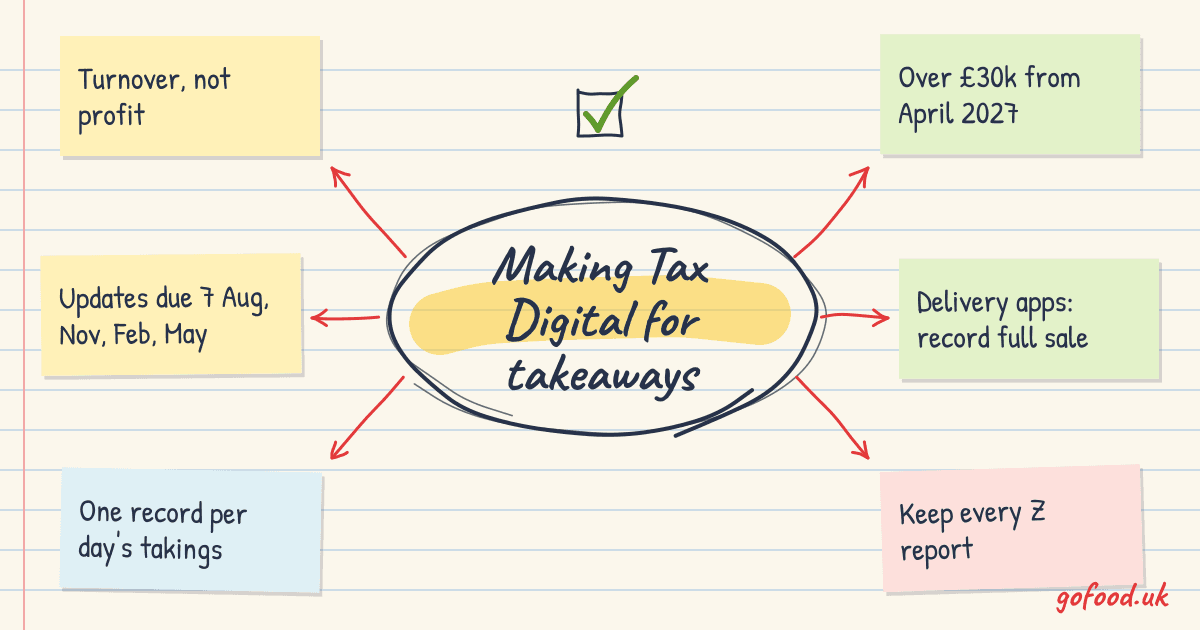
Making Tax Digital for Income Tax now covers sole traders over £50,000 and drops to £30,000 in April 2027. Here is what it means for a takeaway or café, the quarterly deadlines, and how your till's daily reports make it easier.
3 views
EPOS system for a Chinese takeaway: what to look for in the UK
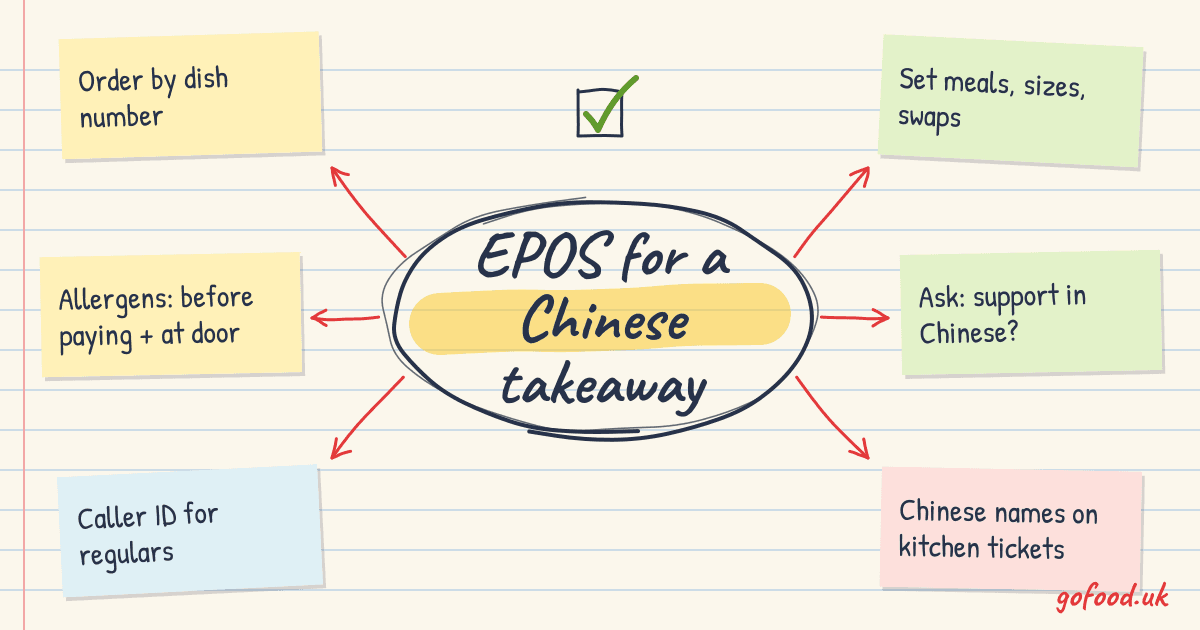
Dish numbers, set meals, caller ID, Chinese kitchen tickets and one menu for the till and online orders. Here is what a UK Chinese takeaway needs from its EPOS, what the hardware costs and what to ask before you sign.
How to cash up a till: an end-of-day guide for UK takeaways and cafés
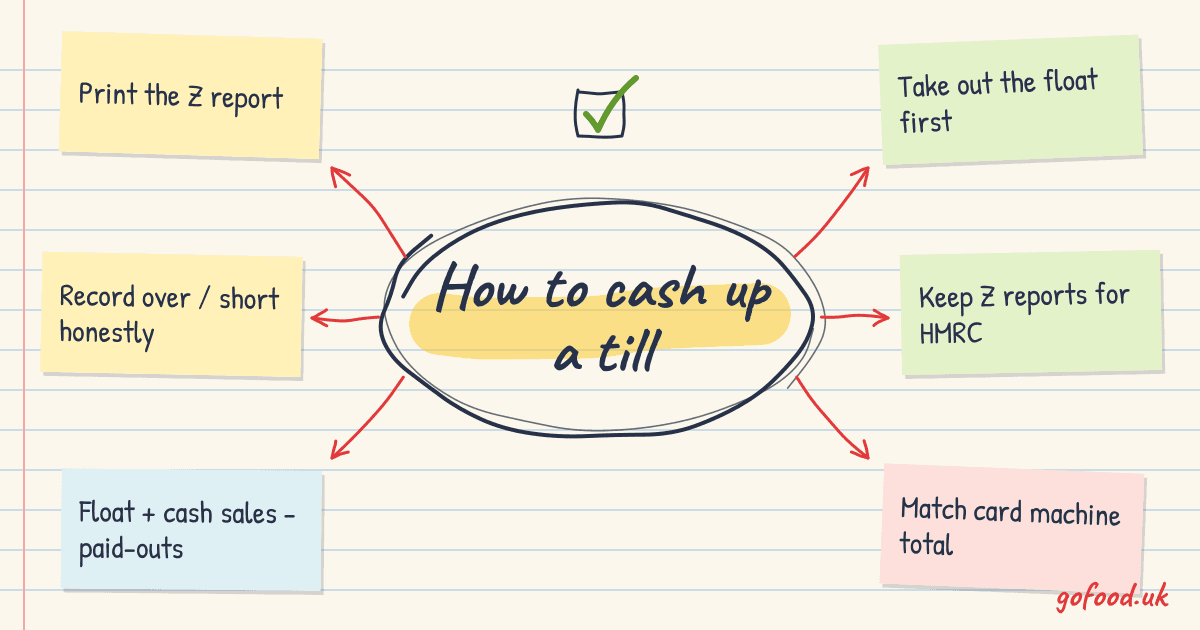
Take out the float, count the cash, check it against the Z report and match your card machine total. Here is the step-by-step method, a worked example and what HMRC expects you to keep.